Hantaran kahwin & bertunang · Made in Malaysia
The Tepak Sireh, in chocolate
The head of the hantaran, sculpted in chocolate.
A tepak sireh sculpted in solid chocolate, the betel set that opens every Malay merisik, peminangan and engagement. The filigree walls, the lidded cembul, the sirih leaves and the kacip laid across the top are all chocolate, hand-cut and hand-painted in gold and maroon. The cartouche on the front is left blank on purpose: we engrave both families’ names on it before it leaves us.
What a tepak sireh is, and why it goes first- RM680
- one size, one price
- 14 days
- is the usual wait
- 10% off
- from 3 pieces up
Photographs and film of the piece
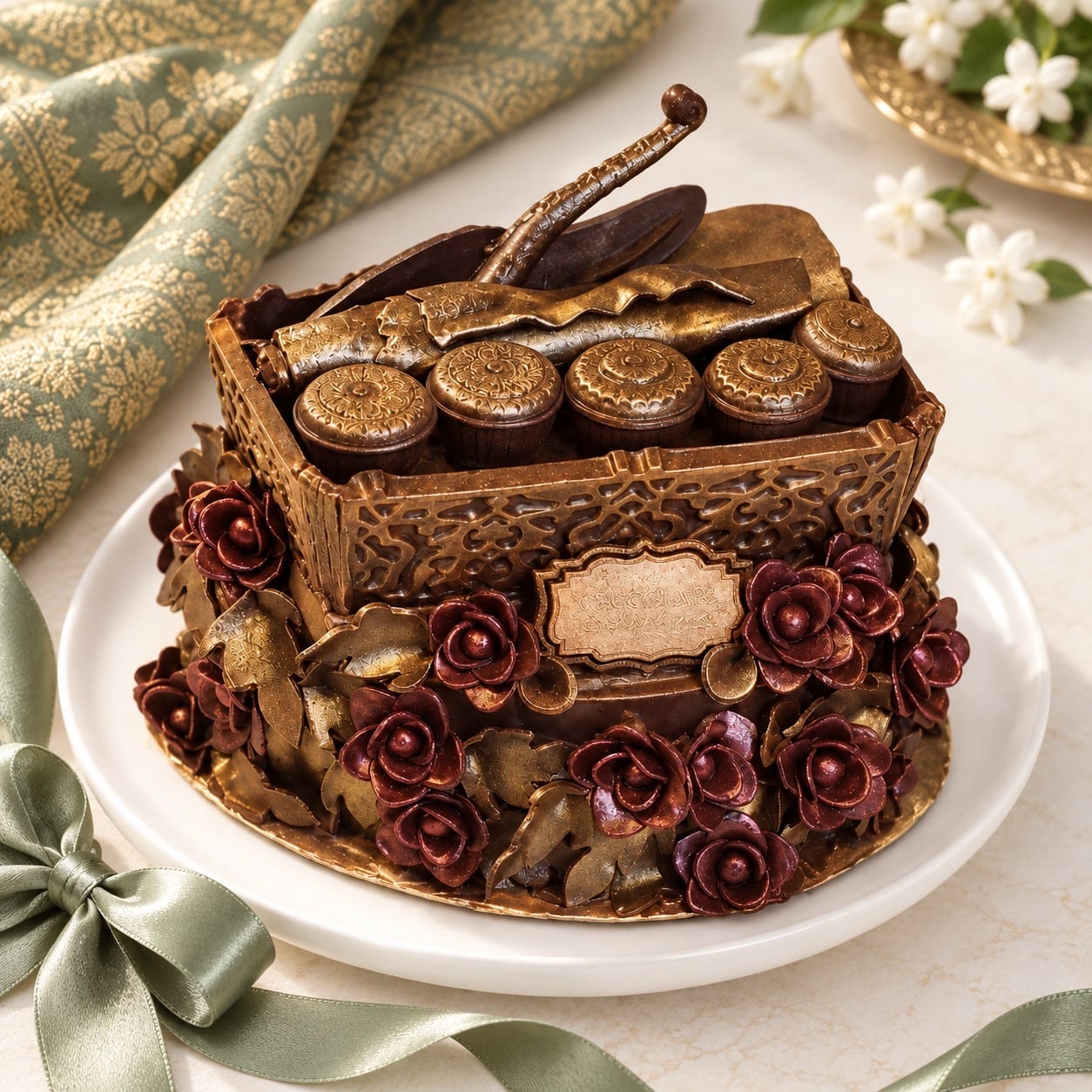
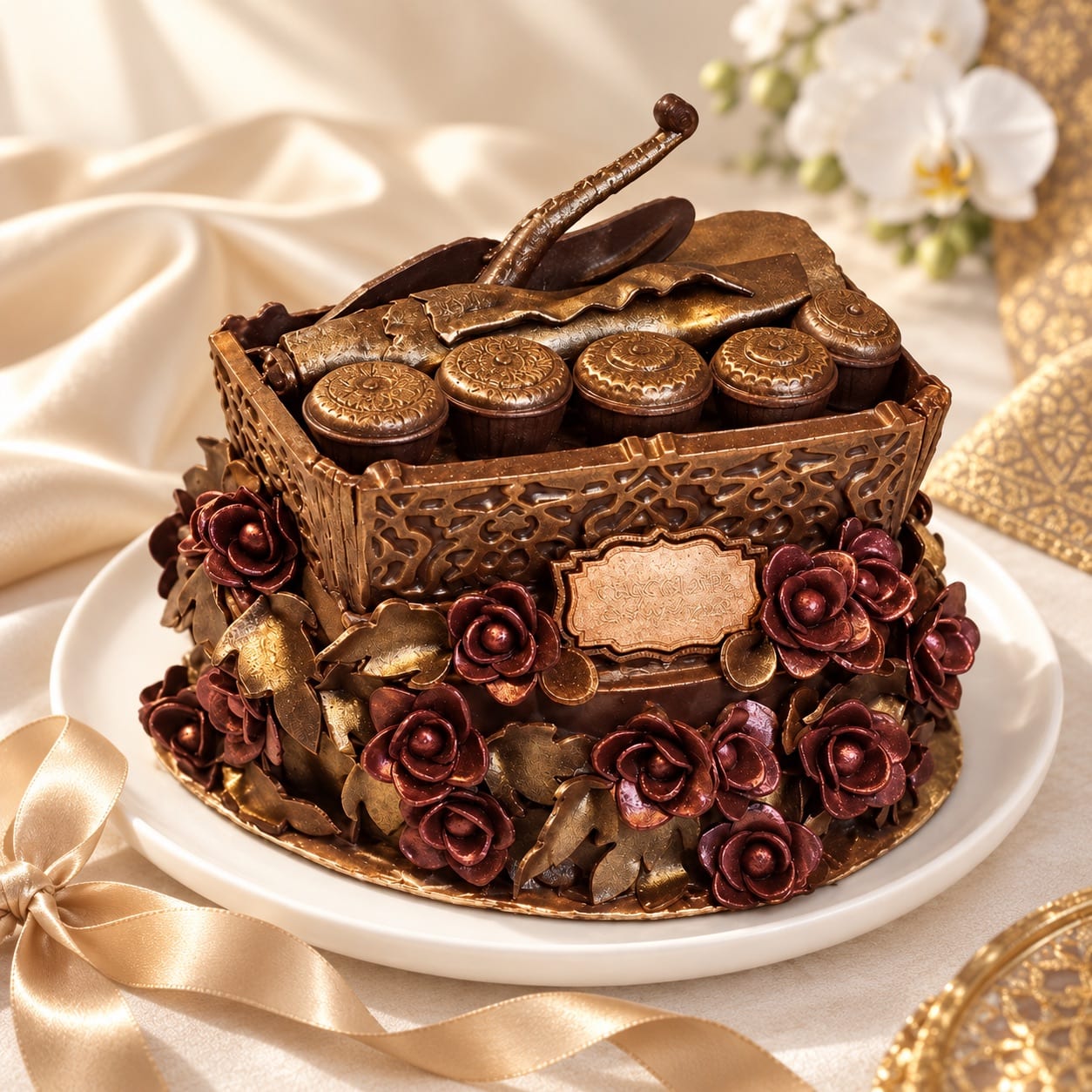
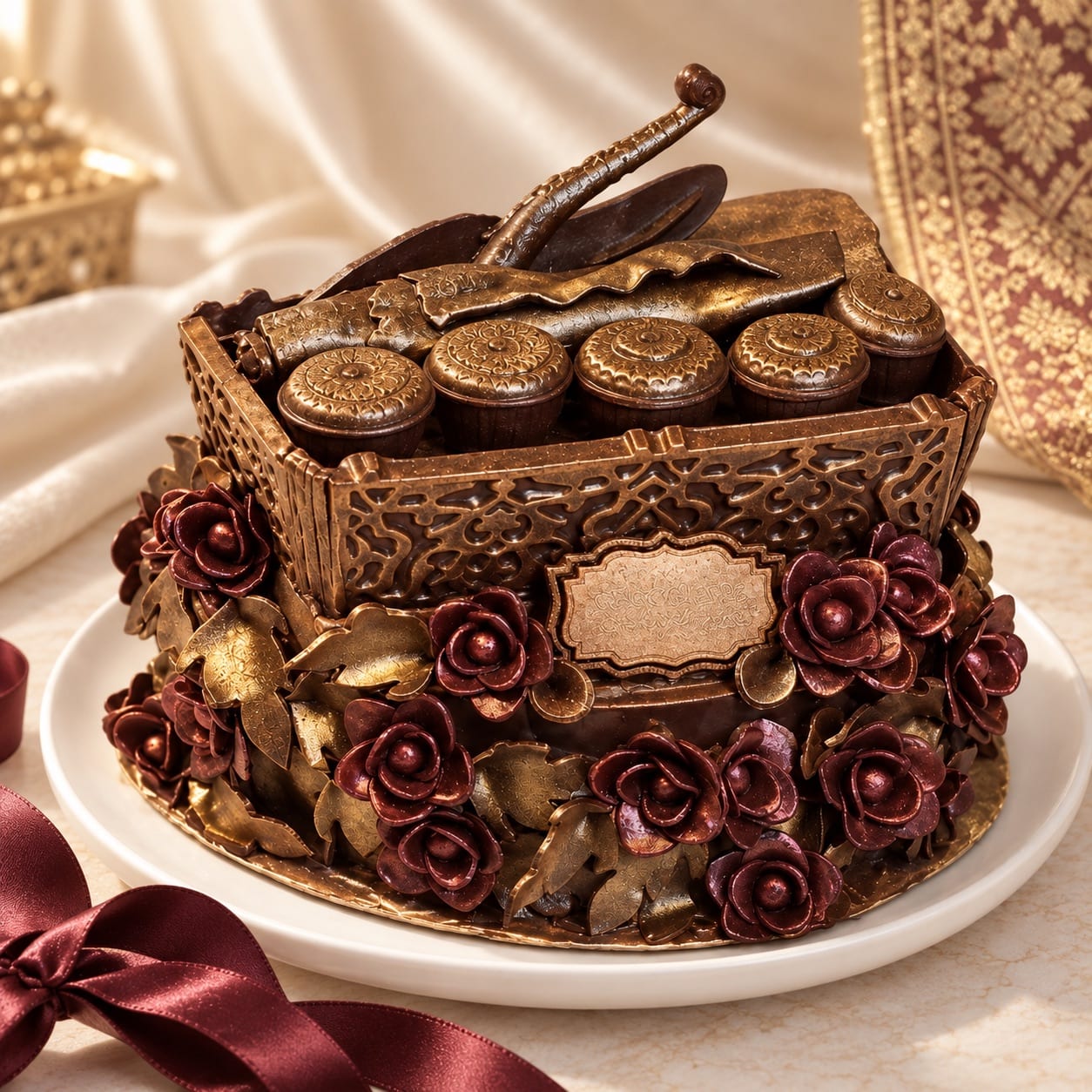
The piece, turning. Every wall, cup, leaf and rose on it is chocolate.
RM680
One size, made to order
We need about 14 days to make one, 7 at the very fastest.
Nearly there. We still need the date you need it and where it is going.
Order on WhatsAppEvery part of it is chocolate
Nothing on it is fondant, wire or plasticTepak
The rectangular lidded box itself
The body of the piece, walled in hand-cut chocolate filigree and finished in gold.
Cembul
The small lidded cups inside, holding pinang, kapur, gambir and tembakau
Moulded chocolate cups with stamped floral lids, each one lifted off by hand.
Sirih
The betel leaves the whole set exists to serve
Dark chocolate leaves, veined and curled while the chocolate was still warm.
Kacip
The hinged cutter that slices the areca nut
Laid across the top, sculpted and gilded, the one piece with a maker’s mark.
Every piece includes
- Both families’ names engraved on the gold cartouche
- Hand-painted cocoa butter finish, gold and maroon
- A photograph of the finished piece before it is boxed
- Presentation base sized to a standard hantaran dulang
- Chilled delivery with a cold pack, or setup on the day in the Klang Valley
You can also add
- A matching sirih junjung in chocolate, to lead the dulang
- Rush production inside a week
- Jawi engraving on the cartouche instead of Rumi
- A short film of the piece for the family group chat
Ordering it for your hantaran
- Apa itu tepak sireh? What is a tepak sireh?
- A tepak sireh is the lidded Malay betel set. Inside sit small covered cembul holding pinang, kapur, gambir and tembakau, a kacip to slice the areca nut, and the sirih leaves themselves beneath a removable tray. It is handed over first at a merisik or a peminangan, and nothing else begins until it has been accepted, which is why it is called the kepala adat, the head of the custom.
- Is it really all chocolate?
- Yes. The walls, the cembul, the leaves, the kacip, the roses and the gold are all chocolate and cocoa butter, solid through the middle. Nothing on it is plastic, wire, fondant or sponge. Break a piece off and it is chocolate all the way down.
- Can you put our names on it?
- That is what the blank cartouche on the front is for. Send us both names as you want them spelled and we engrave them before the piece is boxed. Jawi instead of Rumi is no extra work, just tell us.
- Boleh order untuk hantaran bertunang?
- That is exactly what it is built for. It sits on a standard dulang and leads the hantaran the way the tepak sireh leads a peminangan. If both sides want one, order two and tell us which goes with which side. Three or more and the whole order is ten percent off.
- How far ahead should we order?
- Two weeks is comfortable. A week is possible with a rush fee. Under a week, message us anyway and we will tell you honestly whether we can still do it before you pay anything.
- Is it halal?
- Ask us on WhatsApp and we will send you the certification for the couverture we are using on your order, before you pay a deposit.
What a tepak sireh is
A tepak sireh is the lidded betel set that opens a Malay engagement. It is handed over before anyone states why they came, and by custom the conversation does not properly begin until the other family has accepted it. That is why it is called the kepala adat, the head of the custom. Here is what is inside one, where it sits in the merisik and the peminangan, and what the patterns on its walls are actually saying.
Read the history of the tepak sireh